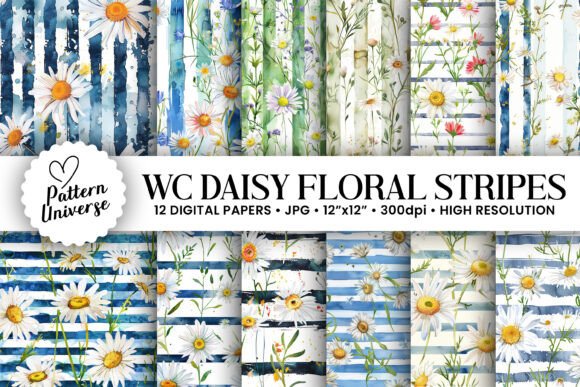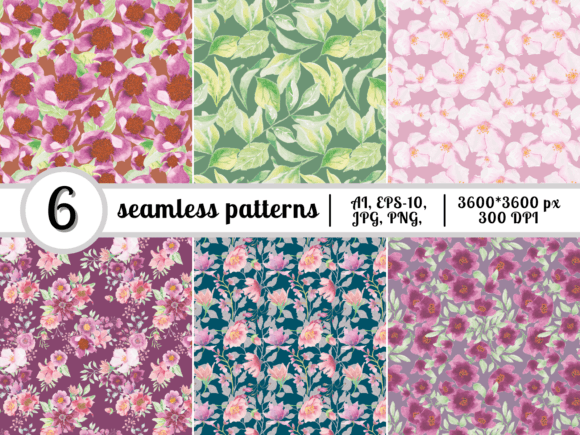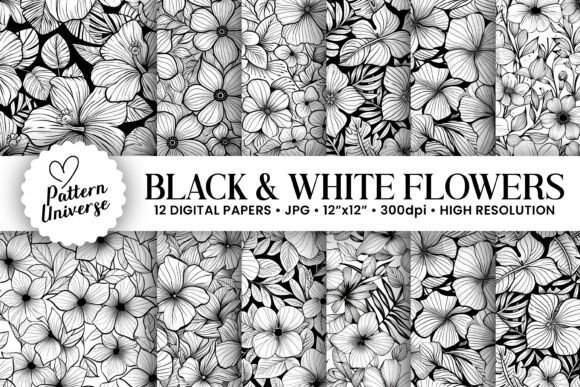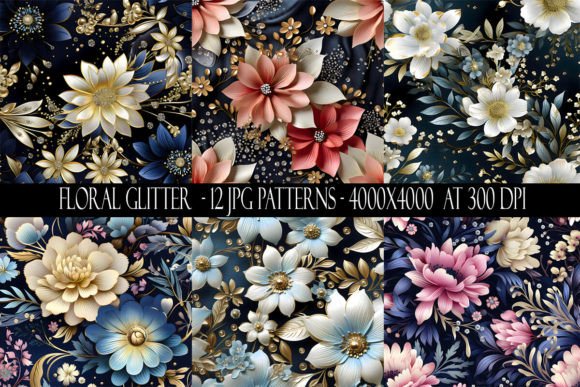
Watercolor and Ink Floral Patterns
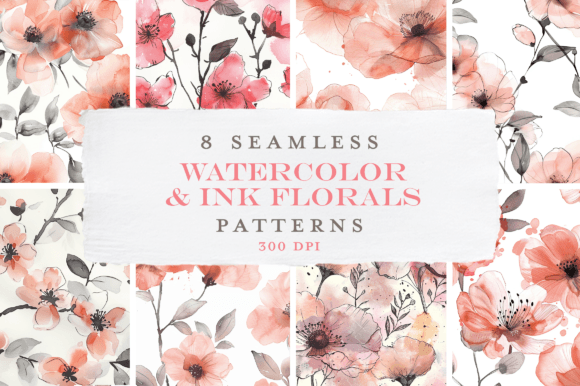
In the modern creative ecosystem, where digital assets are consumed at a breakneck pace, finding a visual element that balances organic softness with structural clarity is a strategic advantage. Watercolor and Ink Floral Patterns represent more than just a decorative aesthetic; they are a functional design resource that bridges the gap between hand-crafted authenticity and commercial scalability. This specific collection of eight seamless patterns combines the ethereal quality of watercolor washes with the crisp definition of black ink lines, creating a versatile toolkit for professionals who demand both beauty and precision in their output.
The value of this asset lies in its technical specifications and its immediate applicability across diverse workflows. With each pattern provided as a high-resolution 300 DPI PNG file at 3600×3600 pixels (12×12 inches), the files are engineered to meet the rigorous demands of print production while remaining manageable for web-based graphic design. This duality allows designers, entrepreneurs, and content creators to utilize the same asset from the initial sketch phase through to final product manufacturing without compromising image integrity.
Integrating Floral Assets into Professional Workflows
For small business owners and product manufacturers, the transition from concept to physical goods often involves multiple stages of file conversion and resizing. A common pain point is the degradation of image quality when scaling up vector or raster graphics for large-format printing. The inclusion of 300 DPI resolution in these Watercolor and Ink Floral Patterns eliminates the need for complex upscaling algorithms that can introduce artifacts or blurriness. Whether you are preparing a mockup for a new stationery line or generating a bulk order of fabric prints, starting with a 3600-pixel source ensures that the delicate transitions in the watercolor washes remain smooth and the ink lines retain their sharp edges.
In the realm of digital marketing and social media management, visual consistency is key to brand recognition. These seamless patterns offer a unique opportunity to create cohesive branding materials that stand out against the stark, geometric backgrounds typical of corporate design. Marketers can use the "all-over print" capability to generate backgrounds for email newsletters, blog headers, or digital packaging inserts. Because the patterns are seamless, they can be tiled infinitely in software like Adobe Photoshop, Illustrator, or Canva, allowing for rapid iteration on layout designs. This efficiency is crucial for freelancers and agencies working under tight deadlines, enabling them to produce high-quality visuals without spending hours manually recreating textures.
Strategic Applications Across Industries
The versatility of these eight distinct floral designs makes them suitable for a wide array of industries, from education to e-commerce. In the educational sector, teachers and curriculum developers often struggle to find materials that engage adult learners or students without appearing juvenile. The combination of watercolor softness and ink structure strikes a sophisticated tone that elevates worksheets, presentation slides, and educational handouts. Educators can integrate these patterns into lesson plans regarding botany, art history, or even business planning, using the natural imagery to soften the delivery of complex information.
For scrapbookers and hobbyists, the digital nature of these files offers a level of flexibility that traditional paper crafts cannot match. Digital scrapbooking has grown significantly, allowing users to layer textures, photos, and text with greater control. By importing these 12×12 inch PNGs directly into design software, hobbyists can create custom layouts that mimic the look of handmade journals but with the ability to edit, save, and reproduce indefinitely. The black ink elements provide excellent contrast for overlaying typography, ensuring that handwritten-style fonts or bold sans-serifs remain legible over the busy background.
In the textile and fashion industry, the demand for unique, non-repetitive prints is driving designers toward custom assets. While many stock patterns suffer from obvious tiling issues, the high pixel count and seamless construction of these floral patterns allow for true all-over printing. Designers can apply these patterns to garments, scarves, or home decor items with confidence that the repeat will align perfectly. Furthermore, the availability of separate PNG files means that color adjustments can be made easily if a client requires a specific palette modification before sending the file to a printer.
Technical Considerations for Implementation
When integrating any digital asset into a professional workflow, understanding the file format is essential. The choice of PNG (Portable Network Graphics) is particularly strategic for this type of artwork. Unlike JPEG formats, which use lossy compression and can introduce halos around high-contrast areas like black ink lines, PNGs preserve transparency and maintain lossless quality. This is critical when layering the floral patterns over other design elements. For instance, if a designer wants to place a floral pattern behind a semi-transparent text box or blend it with a photograph using a "multiply" or "overlay" blend mode, the clean edges of the PNG ensure the effect looks intentional and polished.
Organization and version control are often overlooked aspects of creative projects. Having a curated set of eight distinct patterns provides a built-in system for variation without requiring external research. Instead of searching for new assets mid-project, which disrupts focus and breaks the creative flow, a professional can cycle through the eight options to test different moods. One pattern might work best for a romantic wedding invitation suite, while another with bolder ink strokes might suit a modern botanical skincare label. This variety supports a process-oriented approach to design, where experimentation is structured rather than chaotic.
Compatibility with various design platforms further enhances the utility of these assets. Whether the user is working in desktop applications like Affinity Designer or cloud-based tools like Figma, the standard dimensions of 3600×3600 pixels fit seamlessly into most canvas setups. This universality reduces friction in collaborative environments where team members might use different software stacks. It also facilitates easy sharing with clients or printers, as the file size remains reasonable despite the high resolution, avoiding unnecessary bandwidth issues during transfers.
Optimizing Quality and Consistency
Maintaining consistency across a project is vital for establishing trust with an audience. When a brand uses a specific texture or pattern, it creates a visual anchor. By utilizing the same set of Watercolor and Ink Floral Patterns across different touchpoints—such as a website header, a physical business card, and a promotional flyer—a business reinforces its identity. The seamless nature of the files ensures that no matter how the pattern is cropped or stretched, the underlying logic of the design holds up. This reliability is a significant factor for publishers and graphic designers who need to deliver predictable results to stakeholders.
Quality control extends to the preparation of the files for print. Before sending a job to a commercial printer, it is standard practice to convert RGB images to CMYK to ensure color accuracy. While the original files are likely designed in RGB for screen viewing, the high resolution allows for sufficient data retention during this conversion process. The black ink elements, being solid and defined, translate well to print, whereas the watercolor gradients require careful monitoring to avoid muddy tones. Professionals should always perform a proofing step, checking the pattern at 100% zoom to ensure the grain of the paper does not interfere with the fine details of the ink lines.
Long-Term Value and Adaptability
The lifecycle of a digital asset often determines its return on investment. A one-off illustration might serve a single purpose, but a library of high-quality, versatile patterns offers long-term utility. As trends shift from purely digital aesthetics back to tactile, hand-made feels, resources like these become increasingly valuable. They allow creators to tap into the "craft economy" without needing actual painting skills. This democratization of high-end design elements empowers solopreneurs and small businesses to compete visually with larger corporations.
Furthermore, the modular nature of these patterns encourages innovation. Creators can isolate specific flowers or ink splatters from the full pattern to create accents, icons, or borders. This granular usage expands the potential applications far beyond simple background fills. It transforms a static image into a dynamic design system. By thinking of these files not just as pictures but as components of a larger visual language, users can maximize the utility of their purchase, adapting the assets to future projects that may not have been anticipated at the time of acquisition.
In conclusion, the integration of Watercolor and Ink Floral Patterns into a workflow represents a practical decision that enhances both the aesthetic quality and operational efficiency of creative projects. From the initial planning stages to the final execution, having access to high-resolution, seamless, and professionally crafted assets removes technical barriers and allows the focus to remain on strategy and storytelling. Whether used for stationery, fabric, or digital media, these patterns provide a reliable foundation upon which compelling visual narratives can be built.