Vintage Sweet Berries Retro Patterns: A Comprehensive Review of the Digital Asset Bundle
In the landscape of digital design assets, few themes manage to balance nostalgia with modern utility as effectively as Vintage Sweet Berries Retro Patterns. This collection represents more than just a set of decorative images; it is a curated library of textures and motifs designed for professionals and hobbyists who require high-quality, repeatable backgrounds for diverse applications. Whether you are a small business owner creating packaging, a blogger designing printables, or an artist preparing sublimation files, the specific characteristics of this bundle offer a distinct aesthetic that resonates with current trends in shabby chic and rustic design.
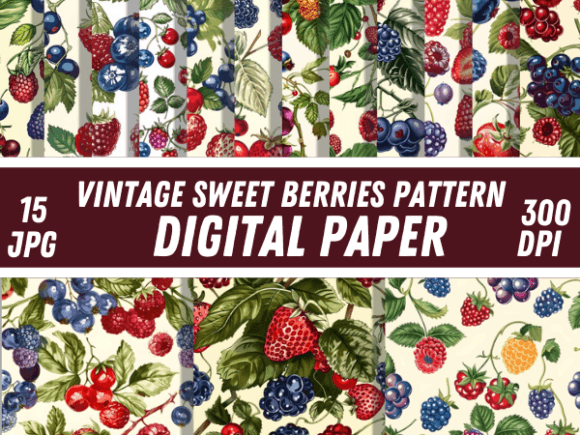
The core value of this product lies in its versatility. It is not merely a single image but a cohesive set of 15 digital papers contained within a single zip file. Each file is rendered at 3600 x 3600 pixels with a resolution of 300 DPI, ensuring that the output remains crisp regardless of whether the final application requires web display or large-format printing. The JPG format provides broad compatibility across various software ecosystems, from Adobe Creative Cloud to simpler DIY crafting tools.
Defining the Aesthetic and Technical Specifications
When evaluating Vintage Sweet Berries Retro Patterns, one must first understand the visual language it employs. The design philosophy centers on "shabby chic" and "traditional handcrafted" elements. This translates into patterns featuring floral leaves, lush foliage, and depictions of juicy red and blue berries. The imagery evokes a sense of a bountiful harvest, capturing the essence of summer vines, bushy gardens, and organic flavors.
From a technical standpoint, the specifications are robust for a digital download product. The 300 DPI resolution is the industry standard for high-quality printing, which is critical for projects like greeting cards, wedding stationaries, and fabric textures where pixelation would be immediately apparent. The square aspect ratio (3600 x 3600) offers flexibility, allowing designers to crop the images for specific needs without losing significant detail. However, users should be aware that while the source files are high-definition, the final output quality is dependent on the user's printing hardware and monitor settings. Actual colors may vary slightly due to these variables, a standard caveat for any digital art asset.
Practical Applications Across Industries
The true strength of this digital paper set is its adaptability. Unlike niche assets that serve only one purpose, Vintage Sweet Berries Retro Patterns can be integrated into workflows spanning multiple industries. For entrepreneurs and small business owners, the textures are ideal for creating physical products. The detailed textures make them suitable for wrapping paper, fabric printing, and bag printing. The "rustic essentials" vibe aligns perfectly with brands focusing on organic, natural, or farm-to-table concepts.
- Crafting and DIY Projects: Enthusiasts utilizing cut machines can use these files for vinyl decals, iron-on transfers, and acrylic tumbler designs. The intricate details of the berries and leaves provide enough contrast for clean cuts and vibrant prints.
- Event Planning and Stationery: The romantic and nostalgic tone makes these patterns excellent for Valentine's Day 2024 backgrounds, birthday party paper patterns, and wedding invitations. They support themes ranging from cozy traditional gatherings to elegant garden parties.
- Digital Content Creation: Bloggers and educators can utilize the seamless patterns as backgrounds for e-books, book covers, scrapbook decorations, and junk journal layouts. The "handmade crafted texture" adds a layer of authenticity that flat digital colors often lack.
- Sublimation and Merchandise: With a focus on sublimation and mug wrapping, these designs allow creators to produce merchandise like 11oz mugs, sweaters, and wall art that feels tactile and unique.
Evaluating Quality and Usability
Reliability is a key factor when purchasing digital bundles. In terms of consistency, the Vintage Sweet Berries Retro Patterns maintain a unified theme throughout the 15 included files. The repetition is seamless, which is essential for background usage where tiling might occur. The high level of detail ensures that even when zoomed in, the individual elements—such as the antioxidant-rich berries or the delicate leaf veins—remain clear.
However, usability comes with considerations regarding color fidelity. Because the product relies on JPG compression, users working with strict color management systems (like those in professional printing presses) should perform a soft-proof before finalizing orders. The description notes that colors may vary based on monitor settings, which is accurate. While the files are high-resolution, the RGB color space used for screens does not always translate perfectly to CMYK printing processes. For most creative uses, such as social media graphics or home printing, this variance is negligible, but it is a factor to keep in mind for commercial production.
The "cozy traditional" style is both a strength and a limitation. It appeals strongly to audiences seeking warmth, nostalgia, and a connection to nature. If your brand identity leans towards futuristic, minimalist, or corporate aesthetics, this pattern set will likely feel out of place. Conversely, for those targeting demographics interested in gardening, baking, vintage fashion, or artisanal crafts, the alignment is nearly perfect.
Who Benefits Most from This Collection?
This asset bundle is particularly valuable for freelancers and creators who need to scale their output without compromising on quality. Instead of sourcing individual images and worrying about licensing or resolution mismatches, a pre-bundled set like this streamlines the workflow. The inclusion of 15 variations allows for A/B testing in marketing materials or providing variety in a single project, such as a series of seasonal greeting cards.
For educators and content publishers, the "juicy tart ripe seasonal" imagery serves as an engaging visual aid. It can enhance lesson plans related to botany, nutrition, or culinary arts by providing authentic-looking illustrations of fresh harvests and wholesome ingredients. The "antioxidant nutritious" and "luscious scrumptious" descriptors in the metadata suggest a thematic fit for health and wellness blogs, adding a visual layer to discussions about healthy eating and natural flavors.
Strategic Recommendations and Limitations
To maximize the value of Vintage Sweet Berries Retro Patterns, users should approach the files with a clear plan. Since the images are high-resolution, they should be saved in their original format until the final export step to prevent generational loss in quality. When using these for sublimation or fabric printing, consider how the pattern repeats; the seamless nature of the design is a significant advantage here, but testing a small tile is recommended to ensure no visible seams appear after scaling.
A potential limitation is the specificity of the theme. The heavy emphasis on berries, vines, and shabby chic elements means the assets are less versatile for general-purpose business documents compared to neutral geometric patterns. They are best deployed in contexts where the "vintage" and "organic" narrative is central to the message. Furthermore, while the digital files are permanent, the physical manifestation of the design depends entirely on the user's equipment. A low-quality printer will not do justice to the 300 DPI promise, so investing in good printing supplies is necessary to realize the full potential of the product.
In conclusion, Vintage Sweet Berries Retro Patterns stands out as a well-constructed digital resource for creatives who value texture and thematic depth. Its combination of high-resolution technical specs and a charming, harvest-inspired aesthetic makes it a practical tool for a wide range of projects, from handmade crafts to professional marketing materials. By understanding its strengths in rustic design and acknowledging the variables of digital-to-physical translation, users can effectively integrate these assets into their workflows to create visually compelling and emotionally resonant work.