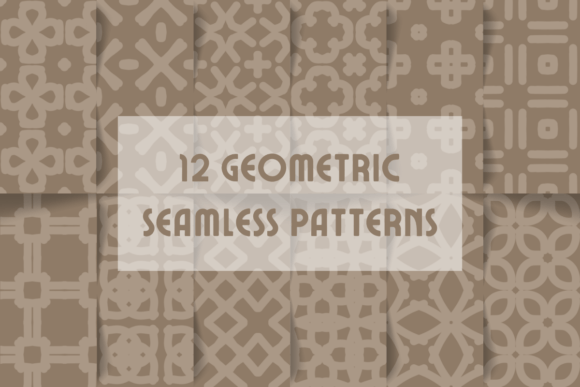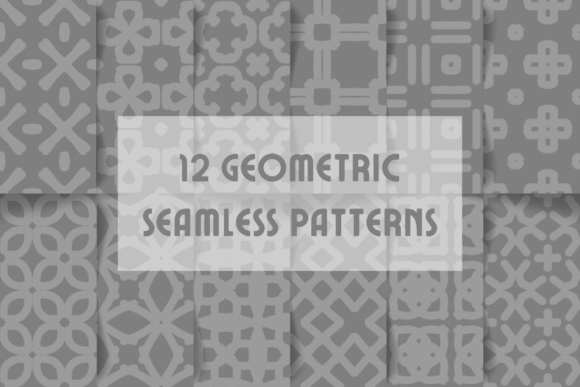
Gray Geometric Seamless Patterns: A Comprehensive Guide to Digital Paper Selection
In the evolving landscape of digital design and print-on-demand services, the demand for versatile, high-quality assets has never been higher. Among the myriad of options available, Gray Geometric Seamless Patterns have emerged as a foundational element for professionals seeking a balance between modern aesthetics and functional utility. This specific category of digital resources offers more than just visual appeal; it provides a structured framework that can adapt to diverse applications ranging from textile printing to sophisticated stationery designs.
When evaluating digital assets, designers often face a critical decision: whether to invest in a comprehensive collection like the 12 gray geometric seamless pattern digital paper set or to assemble individual elements from various sources. Understanding the nuances of these patterns is essential for making an informed choice that aligns with project requirements, budget constraints, and creative goals. This analysis explores the distinct characteristics of gray geometric seamless patterns, compares them against alternative approaches, and outlines the specific scenarios where they offer the most value.
The Distinctive Nature of Gray Geometric Seamless Patterns
At its core, a gray geometric seamless pattern is defined by its ability to tile infinitely without visible breaks or interruptions. The "seamless" attribute ensures that when the image is repeated horizontally or vertically, the edges align perfectly, creating a continuous surface. This technical feature is non-negotiable for applications such as wallpaper, fabric wrapping, and background textures.
The color palette of gray introduces a layer of sophistication and neutrality. Unlike vibrant color schemes that can dominate a design, gray tones act as a stabilizing force. They allow other elements—such as typography, product photography, or colorful accents—to take center stage. Furthermore, gray geometric patterns possess a unique versatility. They can convey a minimalist Scandinavian aesthetic, a brutalist industrial look, or a subtle corporate backdrop depending on the contrast and line weight used.
The inclusion of 300 DPI resolution at 3000 x 3000 pixels in this specific collection elevates it above standard web graphics. High DPI (Dots Per Inch) is crucial for print-on-demand products. When a customer orders a notebook cover, a tote bag, or a piece of framed art, the printer requires sufficient pixel density to ensure sharp lines and crisp edges. Low-resolution files often result in pixelation or blurriness when scaled up, rendering them unsuitable for physical production. The dimensions provided here offer ample room for cropping and resizing while maintaining integrity.
Evaluating the Value of a Curated Collection vs. Individual Assets
One of the primary considerations for designers is the efficiency of their workflow. A collection containing 12 PNG files of gray geometric seamless patterns presents a significant advantage over sourcing single images individually. When working on a large project, such as a full stationery suite or a clothing line, consistency is key. Acquiring patterns from different creators often leads to variations in line thickness, grayscale values, and texture quality. A curated set ensures that all 12 designs share a cohesive visual language, allowing for seamless transitions between different products within a brand identity.
Strengths of the Multi-Pattern Approach:
- Consistency: All 12 patterns are designed to work together, ensuring a unified look across various deliverables.
- Efficiency: Downloading one package saves time compared to searching, vetting, and purchasing multiple separate licenses.
- Variety within Unity: While the theme remains consistent, having 12 distinct variations allows for differentiation between products (e.g., using a dense pattern for a notebook cover and a sparse one for a letterhead).
However, there are tradeoffs to consider. A fixed set of 12 patterns may not perfectly match every specific niche requirement. If a designer needs a pattern with a very specific angle or a unique shade of charcoal that differs slightly from the collection, they might find the set limiting. In such cases, custom vector creation or hiring a graphic designer becomes a necessary alternative, though it comes with a significantly higher cost and longer turnaround time.
Comparison with Alternative Design Approaches
To make a well-rounded decision, it is helpful to compare gray geometric seamless patterns against other common design strategies. The choice often depends on the intended medium and the desired emotional impact of the final output.
Seamless Patterns vs. Solid Colors
Solid colors are the simplest option, offering zero distraction. However, they lack the depth and interest that geometric patterns provide. A solid gray background can appear flat or boring in certain contexts, particularly for premium packaging or high-end textiles. Gray Geometric Seamless Patterns add texture and movement without introducing the chaos of complex illustrations. They serve as a middle ground, providing enough detail to engage the eye while remaining subtle enough to support text and imagery.
Seamless Patterns vs. Photographic Textures
Photographic textures, such as concrete, wood grain, or marble, offer realism. While realistic textures are excellent for creating immersive environments, they can be difficult to integrate into clean, modern designs. They often contain unwanted details or irregularities that clash with precise geometric layouts. Geometric patterns, by contrast, are abstract and controlled. They are ideal for branding materials where clarity and professionalism are paramount. For instance, a financial institution might prefer the orderliness of a gray geometric grid over the unpredictability of a stone texture.
Raster Files (PNG) vs. Vector Formats
The collection described consists of PNG files. It is important to understand the implications of this format. PNGs are raster images, meaning they are made of pixels. While the 300 DPI resolution makes them suitable for most print sizes, they do not scale infinitely like vector files (SVG, EPS). If a project requires scaling a pattern to billboard size, a vector file would be superior. However, for standard print-on-demand items like mugs, t-shirts, and notebooks, high-resolution PNGs are the industry standard and offer faster loading times and easier compatibility with many design software suites.
Strategic Applications and Use Cases
The versatility of gray geometric seamless patterns makes them applicable across a wide spectrum of industries. Understanding where these patterns fit best helps in maximizing their return on investment.
Digital Backgrounds and UI Design: In user interface design, backgrounds need to be unobtrusive yet engaging. A subtle gray geometric pattern can break up large areas of white space, reducing eye strain and adding a touch of personality to apps or websites without distracting from the content. The neutral tone ensures accessibility compliance, as gray typically provides good contrast ratios with black or white text.
Stationery and Printables: This is perhaps the most robust application area. Whether designing wedding invitations, business cards, planners, or scrapbooking kits, gray geometric patterns provide a timeless backdrop. The 12 variations allow a designer to create a full range of products—from bold covers to delicate inner pages—all sharing a cohesive style. The high resolution ensures that fine details in the geometry remain sharp when printed on high-quality cardstock.
Textiles and Fashion: In the world of fashion, geometric prints are perennially popular. The gray palette is particularly advantageous for apparel because it appeals to a broad demographic and pairs easily with other colors. Manufacturers can use these seamless patterns to create fabrics for shirts, dresses, or home decor items like curtains and cushions. The seamless nature of the file is critical here, as the pattern must repeat flawlessly across the width of the fabric roll.
Print on Demand (POD): For entrepreneurs running POD businesses, the reliability of the asset is paramount. The 3000 x 3000 px specification meets the quality standards of major POD platforms. By utilizing a set of 12 distinct patterns, a seller can diversify their store offerings without needing to commission new artwork for each SKU. This scalability is essential for building a sustainable brand.
Decision Factors: When to Choose This Resource
Selecting the right digital asset ultimately comes down to matching the tool to the task. Gray Geometric Seamless Patterns are the right choice when the project demands a professional, modern, and scalable solution that balances visual interest with neutrality. They are particularly effective when the goal is to highlight other design elements rather than compete with them.
Readers should consider this resource if:
- Professionalism is a priority: The design needs to look polished and credible, avoiding the chaotic look of overly busy or colorful patterns.
- Print quality is required: The project involves physical production where 300 DPI and seamless tiling are mandatory.
- Workflow efficiency matters: There is a need for a variety of related patterns to maintain brand consistency across multiple products.
- Neutral styling is desired: The design context requires a backdrop that does not clash with existing color palettes.
Conversely, this resource may not be the optimal choice if the project requires infinite scalability beyond the 3000px limit (requiring vectors), if the design calls for highly specific organic shapes rather than geometric ones, or if the budget is extremely limited and free, lower-resolution alternatives suffice for web-only use.
Conclusion on Asset Evaluation
The market for digital design assets is saturated, but few categories offer the same level of practical utility as gray geometric seamless patterns. The combination of high resolution, seamless tiling capabilities, and a neutral yet stylish aesthetic makes this specific collection a powerful tool for designers and entrepreneurs alike. By understanding the strengths of the 12-pattern set and how it compares to other formats and styles, users can confidently integrate these assets into their workflows.
Whether creating a digital background, launching a print-on-demand store, or designing a complete stationery line, the decision to utilize Gray Geometric Seamless Patterns represents a strategic move toward quality and consistency. It allows creators to focus on their core message and design strategy, knowing that the foundational textures are reliable, professional, and ready for production.